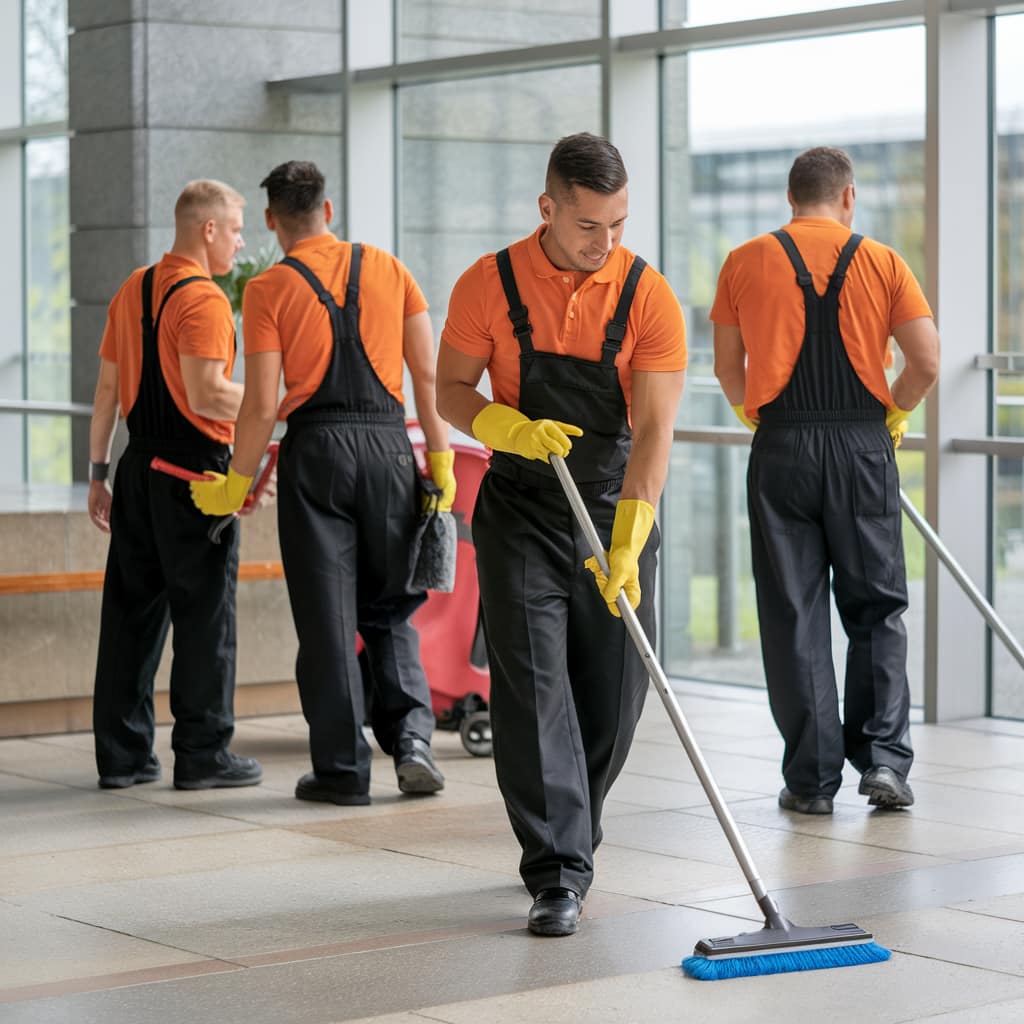
Retail cleaning needs to support both presentation and daily operations. Customers see the entrance, glass, floors, counters, fitting or service areas, and restrooms. Employees also rely on stock, break, office, and receiving areas that may follow a different schedule.
For a Nashville store, showroom, or customer-facing commercial space, a written checklist helps separate opening preparation, recurring upkeep, and periodic detail work. It also gives the cleaning provider the information needed to plan around business hours and deliveries.
Start With the Customer Path
Walk the route a customer takes from the entrance through the space. Record the visible surfaces and areas that shape the first impression:
- Entrance doors and accessible glass
- Entry mats and surrounding floors
- Sales, showroom, or service floors
- Checkout, reception, or service counters
- Fitting rooms or consultation areas, when present
- Public restrooms
- Mirrors and interior glass included in the scope
- Waiting areas, seating, and shared touchpoints
Then note where traffic changes. Entrances, queue areas, popular aisles, and paths to restrooms may need more frequent attention than low-traffic sections.
Separate Customer Areas From Operational Areas
Back-of-house spaces matter, but they may have different access and priorities. List stock rooms, employee break areas, offices, receiving zones, staff restrooms, and other approved work areas separately.
Do not assume that every stock, storage, food, equipment, or merchandise area can be cleaned in the same way. The store should identify restricted items, surfaces, displays, and zones that staff will handle themselves.
A clear scope should state whether the cleaning team moves lightweight items, works around fixed displays, or requires the store to clear surfaces first. It should also identify areas excluded because of merchandise, equipment, safety, or access.
Build an Opening-Preparation Checklist
Cleaning for a new opening, reopening, renovation, or turnover is different from normal recurring upkeep. Before the final cleaning window, confirm that other work is substantially complete in the target areas.
An opening-preparation checklist may include:
- Construction dust and residue within the approved scope
- Floors, edges, corners, and entry areas
- Interior glass, doors, and reachable windows
- Counters, shelving exteriors, and empty display surfaces included in the scope
- Restrooms and break areas
- Labels, stickers, or protective material specifically approved for removal
- Final trash and debris covered by the scope
- A walkthrough or punch-list deadline
The store team should identify merchandise, displays, signs, or equipment that must be installed after cleaning. If later work will create new dust or packaging waste, allow time for a final touch-up.
Define Recurring Upkeep by Frequency
Recurring retail cleaning works best when each task has a frequency. The exact schedule depends on store traffic, operating hours, staffing, food or service areas, restrooms, flooring, and presentation standards.
Tasks may be grouped as:
Each Scheduled Visit
Address agreed customer-facing priorities, trash, restrooms, visible floors, and other high-use areas included in the scope.
Weekly or Rotating Detail Work
Rotate lower-traffic edges, ledges, office areas, stock zones, glass, or other tasks that do not need the same attention every visit.
Periodic Projects
Plan deeper carpet care, floor finishing, window cleaning, or detail work separately when the property needs it. These projects may require additional access time or area closures.
Plan Around Store Hours and Deliveries
Choose a service window that accounts for customers, employees, deliveries, alarms, keys, loading access, and the time floors or restrooms must be ready again.
Before service begins, document:
- Opening and closing times
- Employee arrival and departure windows
- Delivery or restocking schedules
- Approved entrances and parking
- Alarm and key procedures
- Restricted merchandise or equipment areas
- A store contact and backup contact
- Tasks that cannot happen near customers
If some work happens during operating hours, use a zone-based plan that keeps the store’s active paths clear.
Prepare a Better Estimate Request
Provide approximate square footage, store type, room list, floor surfaces, glass areas, restroom count, photos, operating hours, access instructions, and the cleaning goal. Explain whether the need is opening preparation, recurring service, a reset clean, or periodic specialty work.
Ask the proposal to list included areas, task frequencies, exclusions, periodic work, and store preparation responsibilities. This makes the plan easier to review after service begins.
Frequently Asked Questions
Is opening preparation the same as recurring retail cleaning?
No. Opening work may involve construction or installation residue, empty displays, and a deadline-driven final clean. Recurring service focuses on maintaining the agreed areas over time.
Should stock rooms be included automatically?
No. The scope should identify approved stock and back-of-house areas, access limits, and any merchandise or equipment the store will handle itself.
Can floor and window projects use a different schedule?
Yes. Periodic floor, carpet, or window work can be scheduled separately from routine visits when the written scope explains the difference.
Plan Retail Cleaning With Maidman
Maidman Commercial Cleaning supports retail spaces and commercial properties in Nashville and Middle Tennessee. Review commercial cleaning in Nashville, see Our Services, or request an estimate for a specific store or project.
For project-readiness guidance, visit Construction Cleanup Prep for Nashville Job Sites and Cleaning Tips & Resources.